
Used HOWO Truck Inspection Checklist: 10 Things to Check Before You Pay
Most used-truck disputes start with a missed check. Here are the ten points our workshop inspects before a HOWO unit is listed for export.
Read articleDeck height, payload, loading method and price — a practical comparison for fleet buyers who move containers, steel or excavators.
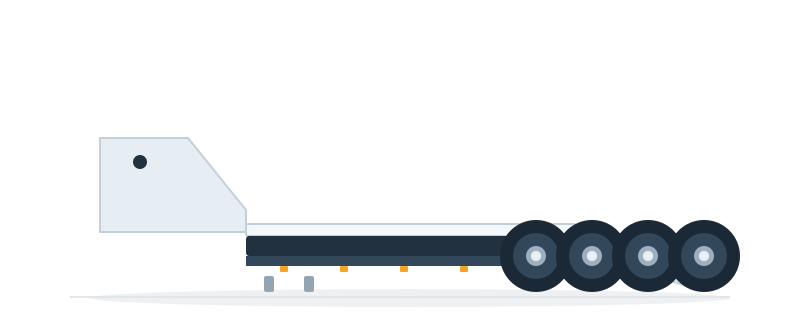
Most fleet buyers in West and East Africa end up choosing between two open-deck trailers: the flatbed and the lowbed. They look similar in a photo, but they are built for different cargo and different roads. Here is how to decide without overpaying.
Choose a flatbed if most of your loads are containers, steel, timber, bagged cargo or general freight that can be lifted onto a 1.5 m deck. Choose a lowbed if you regularly move excavators, dozers, loaders or other machines that cannot climb a ramp.
Many buyers eventually run both: one or two flatbeds for daily freight, plus a lowbed that pays for itself every time a machine needs to move.
Container shuttles from port to depot, steel coils, bagged cement, building materials, timber and mixed loads. If your cargo is under about 3 m tall and can be lifted from the side, a flatbed is cheaper to buy, cheaper to run and easier to load.
If you haul containers most days, look at a skeletal chassis as well: it is lighter than a flatbed, which means more legal payload per trip on weight-limited routes.
Any time an excavator, wheel loader, bulldozer or crane has to move between site, yard and port. Machines cannot be lifted onto a 1.5 m deck safely, and ramps do not solve the problem for a 21 t excavator. A lowbed also keeps the centre of gravity lower, which matters on laterite roads and in the rainy season.
For 20–40 t machines, a 4-axle 80 t lowbed is the standard choice. For 40 t and above, ask for a 3-line 6-axle or detachable gooseneck configuration.
Tell us the cargo (tonnes, length, height), the roads you use and the destination port. We will confirm whether a flatbed or lowbed fits, and quote FOB and CIF so you can compare the landed cost. If you are buying more than one unit, you can load two flatbeds in a 40HQ container in CKD form, which cuts the freight per unit.
Browse our flatbed semi-trailers and lowbed semi-trailers, or send your specification through the contact form.

Most used-truck disputes start with a missed check. Here are the ten points our workshop inspects before a HOWO unit is listed for export.
Read article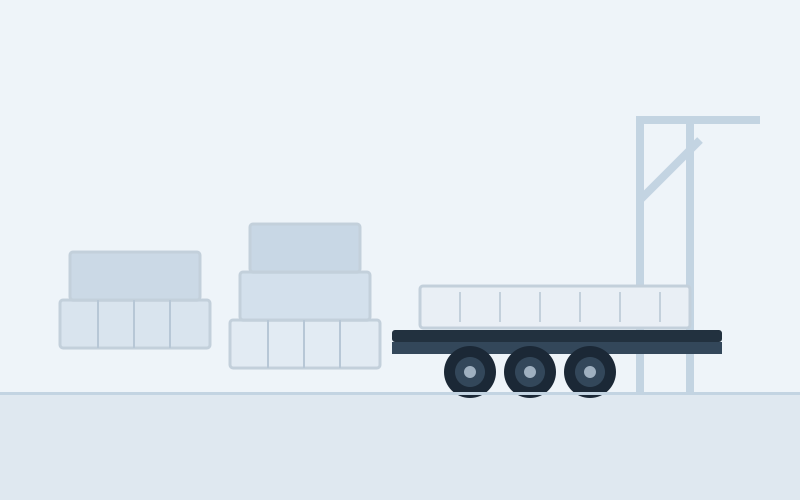
Who pays the freight, which port you should choose, and which documents must arrive before your container does — explained without the jargon.
Read article
Most used-truck disputes start with a missed check. Here are the ten points our workshop inspects before a HOWO unit is listed for export.
Read articleSemi-trailers, construction machinery and inspected used trucks, shipped from Qingdao and Shanghai to African ports.